Friday, January 25, 2013

Margaret Hudson Australia Day 2013

I started my blog 2 years ago with an Australia Day post on John GALLIGAN, my first ancestor to arrive in Australia.

This post, inspired by Helen V Smith's 2013 Australia Day challenge will be about John's wife Margaret HUDSON, my first female direct ancestor to arrive in Australia.
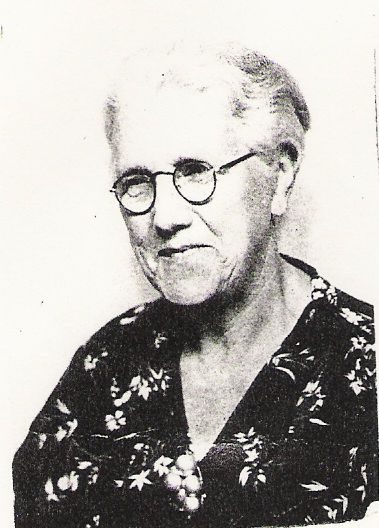
Believed to be Margaret HUDSON
Margaret HUDSON was born 1 January 1867 in Ballinatray, Gorey, Wexford, Ireland.  Her parents were James HUDSON and Jane FITZSIMMONS.  I know Margaret married in Brisbane, Queensland in 1888 so I looked for an arrival prior to that date.  Her death certificate in 1942 indicated she had lived 60 years in Queensland.  Therefore she had arrived approx 1882.

I think that she most likely arrived on the Zamora which left Plymouth 1 April 1882 arriving Brisbane 14 July 1882 with the shipping list showing

  • Matthew HUDSON age 22
  • Ann HUDSON age 18
  • Margt HUDSON age 16
Margaret's wedding to John GALLIGAN in 1888 was witnessed by Annie HUDSON (and I've subsequently confirmed Annie was in Australia via her marriage to Thomas SKELLY & death certificate in 1919 which confirmed her parents and said she resided 39 years in Australia ie arriving 1880).  

But was there a brother Matthew?

The answer is yes and the Queensland police service file and insanity file at the Queensland State Archives have confirmed the family relationship. However,  I have found no trace of Matthew after 1888.

I wonder if Matthew knew John GALLIGAN who was also a constable in the Queensland Police?  There was certainly a period where they both served in the Brisbane city area.  Perhaps he introduced the couple.  Guess we'll never know.


Saturday, May 19, 2012

John Lovelace died 1811

John Lovelace is my 4 x great grandfather.   I knew he had died between June 1809 and December 1811 because he had proved the will of Margaret OWEN (died 1809, Standon Staffordshire) but died before it was fully administered and in Margaret's sister Ann OWEN (died 1814, Standon Staffordshire) will dated December 1811 a beneficiary of the will  is Frances LOVELACE late the wife of my nephew John LOVELACE.  So from that I learnt

  • given Ann & Margaret were unmarried John's mother was likely called ? OWEN - so far I've found no LOVELACE + OWEN marriages

I found the burials of Margaret & Ann OWEN but I found no John LOVELACE in Standon or Staffordshire more generally.  John LOVELACE and Frances (surname unknown & marriage eludes me for now) baptised the following children who are named in Ann OWEN's will:

  • Matilda (1791) St Andrew Holborn
  • Ann (1793) St Andrew Holborn 
  • Lucretia Betty Margaret (1801) St George Bloomsbury
  • My 3 x great grandfather John (1808) Standon Staffordshire 
  • Marcus Brutus Owen - Standon Staffordshire (baptised 1816 but obviously alive in 1811 when Ann did her will) 

There is also a John Junius Brutus son of John & Francis baptised in 1806 in St Andrew Holborn but I am unclear if this John died or if my John was baptised twice.  My John consistently gives Standon Staffordshire as his birthplace in the census.

I looked at the Index to death duty registers on findmypast.  For some reason I only originally did 1810-1811.  Recently I tried 1812 and found John Lovelace, administrator Francis Lovelace, Standon Staffordshire, Bishops Court of Lichfield.  Bingo.  I emailed Lichfield Record Office and after paying my photocopying fee this week received the administration which provides the death date as 23 May 1811 & that he was late of the parish of Standon.

Now where is he buried?  And how old was he?


Sunday, May 13, 2012

Sarah Ann Palmer - death found in 1904

After recently listening to the Genies down under blogging stuff for genies podcast I was thinking it was about time I posted on my blog.  Then I received my Inside History magazine and saw the article by Jill Ball Entering the blogosphere and was reminded about so many great blogs that post much more frequently than me!

So I'll start blogging again by talking about the UK death certificate I received in the mail this week.  It's for my great great grandmother Sarah Ann PALMER (nee WENMAN).

When the UK 1911 census first became available in 2009 I searched for my PALMER ancestors.  I could not find Sarah.  I found her 4 daughters - 3 married , 1 single.  I guessed Sarah had died between 1901 and 1911. So I looked for her death.  From the 186 Sarah Palmer deaths 1901-1911 there were still 15 aged 60+- 5 years.  Could I be sure the death would be registered as Sarah Ann?  In 1901 she was living in St Pancras.  None of the 'possibles' were registered in St Pancras.  I decided to leave it to see if some other evidence came to light.

Fast forward to 2012 - I was tidying up some of the information about the Palmers on my ancestry tree.  I came across a burial in St Pancras Parish Chapel for Finchley Cemetery for  Sarah A Palmer in 1904, aged 60, residing 114 Camden St.  I should immediately have known this was the right one as my great grandmother Agnes PALMER was residing at 114 Camden St at the time of her marriage in 1902.  However, I'd forgotten that.

Instead I saw a P at the end of the entry in the death register & thought maybe that means pauper.  Does it?  Well it worked for me.  I browsed the London Poor Law records for Saint Pancras Workhouse admission and Discharge register, 1902-1906.

I found the same Sarah Palmer ie age, address the same but with added occupation caretaker. As her 1901 census occupation was caretaker I was pretty sure I had my Sarah. She was admitted 15/12/1903 and discharged 18/12/03.

So to the death indexes. There was only 1 of right age in right quarter of 1904 but district Southwark?? I decided to order it.

Around 3 weeks later it arrived & I quickly opened it to confirm it was definitely the right one. Sarah Ann Palmer died in Guy's Hospital which explains why the registration was Southwark.

Saturday, October 29, 2011

Beyond the Internet Geneameme

Pauleen from the Family history across the seas blog has created a Geneameme Beyond the Internet which focuses on genealogy resources beyond the Internet.

Although I use the predominantly use the internet I try to visit archives, record offices etc whenever I travel & have my list on the go for my next visit to the Queensland archives.


Things you have already done or found: bold face type
Things you would like to do or find: italicize (colour optional)
Things you haven’t done or found and don’t care to: plain type

You are encouraged to add extra comments in brackets after each item
  1. Looked at microfiche for BDM indexes which go beyond the online search dates.
  2. Talked to elderly relatives about your family history.
  3. Obtained old family photos from relatives.
  4. Have at least one certificate (birth/death/marr) for each great-grandparent.
  5. Have at least one certificate (birth/death/marr) for each great-great-grandparent.
  6. Seen/held a baptism or marriage document in a church, church archive or microfilm.
  7. Seen your ancestor’s name in some other form of church record eg kirk session, communion rolls.
  8. Used any microfilm from an LDS family history centre for your research.
  9. Researched using a microfilm other than a parish register (LDS family history centre/other).
  10. Used cemetery burial records to learn more about your relative’s burial.
  11. Used funeral director’s registers to learn more about your relative’s burial.
  12. Visited all your great-grandparents’ grave sites.
  13. Visited all your great-great-grandparents’ grave sites.
  14. Recorded the details on your ancestors’ gravestones and photographed them.
  15. Obtained a great-grandparent’s will/probate documents. (not sure if any to find)
  16. Obtained a great-great grandparent’s will/probate documents. (Uriah Palmer)
  17. Found a death certificate among will documents.
  18. Followed up in the official records, something found on the internet.
  19. Obtained a copy of your immigrant ancestors’ original shipping records.
  20. Found an immigration nomination record for your immigrant ancestor[iii].
  21. Found old images of your ancestor’s place of origin (online or other).
  22. Read all/part of a local history for your ancestor’s place of residence.
  23. Read all/part of a local history for your ancestor’s place of origin.
  24. Read your ancestor’s school admission records.
  25. Researched the school history for your grandparents.
  26. Read a court case involving an ancestor (online newspapers don’t count for this).
  27. Read about an ancestor’s divorce case in the archives.
  28. Have seen an ancestor’s war medals.
  29. Have an ancestor’s military record (not a digitised copy eg WWII).
  30. Read a war diary or equivalent for an ancestor’s battle.
  31. Seen an ancestor’s/relative’s war grave.
  32. Read all/part of the history of an ancestor’s military unit (battalion/ship etc).
  33. Seen your ancestor’s name on an original land map.
  34. Found land selection documents for your immigrant ancestor/s.
  35. Found other land documents for your ancestor (home/abroad)
  36. Located land maps or equivalent for your ancestor’s place of origin.
  37. Used contemporaneous gazetteers or directories to learn about your ancestors’ places.
  38. Found your ancestor’s name in a Post Office directory of the time.
  39. Used local government sewerage maps (yes, seriously!) for an ancestor’s street. (in Lewisham, London looking for property left by John Lovelace in his will)
  40. Read an inquest report for an ancestor/relative (online/archives).
  41. Read an ancestor’s/relative’s hospital admission.
  42. Researched a company file if your family owned a business.
  43. Looked up any of your ancestor’s local government rate books or valuation records.
  44. Researched occupation records for your ancestor/s (railway, police, teacher etc).
  45. Researched an ancestor’s adoption.
  46. Researched an ancestor’s insolvency.
  47. Found a convict ancestor’s passport or certificate of freedom.
  48. Found a convict ancestor’s shipping record.
  49. Found an ancestor’s gaol admission register.
  50. Found a licencing record for an ancestor (brands, publican, etc).
  51. Found an ancestor’s mining lease/licence.
  52. Found an ancestor’s name on a petition to government.
  53. Read your ancestor’s citizenship document.
  54. Read about your ancestor in an undigitised regional newspaper.
  55. Visited a local history library/museum relevant to your family.
  56. Looked up your ancestor’s name in the Old Age Pension records.
  57. Researched your ancestor or relative in Benevolent Asylum/Workhouse records.
  58. Researched an ancestor’s/relative’s mental health records.
  59. Looked for your family in a genealogical publication of any sort (but not online remember).
  60. Contributed family information to a genealogical publication.

Saturday, October 15, 2011

The Ancestors' Geneameme

Been a but slack with the blogging so decided to take part in Geniaus Geneameme

The following list shows
Things you have already done or found: bold face type

Things you would like to do or find: italicize (colour optional)

Things you haven’t done or found and don’t care to: plain type

You are encouraged to add extra comments in brackets after each item 

Which of these apply to you?
  1.  Can name my 16 great-great-grandparents
  2.  Can name over 50 direct ancestors
  3.  Have photographs or portraits of my 8 great-grandparents (would love to but with only 3/8 currently I think this may prove elusive)
  4.  Have an ancestor who was married more than three times
  5.  Have an ancestor who was a bigamist
  6.  Met all four of my grandparents (unfortunately only 1was alive when I was born)
  7.  Met one or more of my great-grandparents (missed by more than 20 years)
  8.  Named a child after an ancestor
  9.  Bear an ancestor's given name/s
  10.  Have an ancestor from Great Britain or Ireland (many)
  11.  Have an ancestor from Asia
  12.  Have an ancestor from Continental Europe
  13.  Have an ancestor from Africa
  14.  Have an ancestor who was an agricultural labourer
  15.  Have an ancestor who had large land holdings  (do have a land steward who looked after someone else's land)
  16.  Have an ancestor who was a holy man - minister, priest, rabbi
  17.  Have an ancestor who was a midwife
  18.  Have an ancestor who was an author
  19.  Have an ancestor with the surname Smith, Murphy or Jones
  20.  Have an ancestor with the surname Wong, Kim, Suzuki or Ng
  21.  Have an ancestor with a surname beginning with X
  22.  Have an ancestor with a forename beginning with Z - not a direct ancestor but Zillah Whitehead (1870-1871) is a second cousin twice removed.
  23.  Have an ancestor born on 25th December
  24. Have an ancestor born on New Year's Day (My great grandmother Margaret Hudson was born 1 January 1867 in Ballinatry, Wexford, Ireland)
  25.  Have blue blood in your family lines
  26.  Have a parent who was born in a country different from my country of birth
  27.  Have a grandparent who was born in a country different from my country of birth
  28.  Can trace a direct family line back to the eighteenth century
  29.  Can trace a direct family line back to the seventeenth century or earlier
  30.  Have seen copies of the signatures of some of my great-grandparents
  31.  Have ancestors who signed their marriage certificate with an X
  32.  Have a grandparent or earlier ancestor who went to university
  33.  Have an ancestor who was convicted of a criminal offence (no direct but still hope to find a convict link somewhere)
  34.  Have an ancestor who was a victim of crime
  35.  Have shared an ancestor's story online or in a magazine (Tell us where) - Had a photo and a brief Can you Help? in AFTC (Australian Family Tree Connections)
  36.  Have published a family history online or in print (Details please)
  37.  Have visited an ancestor's home from the 19th or earlier centuries (I've visited some of the areas my ancestors came from like Lisvernane in Tipperary, Weymouth in Dorset and Standon Bowers in Staffordshire but not actually visited an ancestor's home so hope to firstly identify the home address & then to visit one) 
  38.  Still have an ancestor's home from the 19th or earlier centuries in the family
  39.  Have a  family bible from the 19th Century
  40.  Have a pre-19th century family bible