Sunday, February 17, 2019

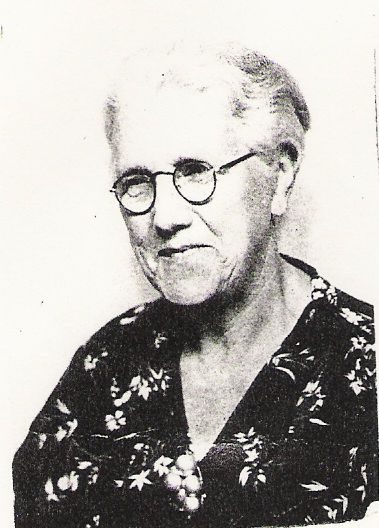
Frances Lenton Jenkins Lovelace

For many years I have looked for a marriage of John Lovelace & Frances (unknown surname) expecting it to be around 1790.

Marriage indexes showed a marriage in Portsea in 1796 of John Lovelace and Frances Jenkins.
I thought this was unlikely to be the "right" one because John & Frances were baptising children in St Andrew Holborn London in 1791 & 1793 and there was no known connection to Portsea.

I recently noticed that the Hampshire Parish registers were available on family search and that, while not available from home, images were available at a family history centre.  Yesterday while visiting my local family history society I was able to view the image as the society is a family history centre.  I've now also found it on findmypast.

I decided to see if the signature for Frances Jenkins (a widow) matched signatures of Frances Lovelace I had on various documents


1796 marriage register Portsea

1812 administrator of will
1812 administrator of will page 2

1817 agreement pre daughter's marriage

I think the signatures look very similar and that the 1796 marriage is the right Francis.

Given Francis was a widow in 1796 I looked for an earlier marriage of  Frances surname unknown to a Jenkins and found one in 1783 in London.  Again the signature for Frances looks similar and I think I have the same Frances

Marriage 1783 St George the Martyr

So then I looked for children of that marriage. 

I found Frances Ann Jenkins baptised in 1785.  She married John Clancy in 1807. 
This Jenkins/Clancy marriage added further evidence I was on the right track for it was witnessed by Frances Lovelace. 

The signature is again consistent and further confirmation that Francis Lenton = Frances Jenkins = Frances Lovelace.

Marriage 1807 St Pancras


Saturday, April 23, 2016

Anzac Day 1916 - Richard O'Brien & Hugh O'Brien


For Anzac Day 2016 I thought I'd see where  Richard O'Brien (a 15th battalion Gallipoli veteran) & brother Hugh O'Brien (enlisted in October 1915 in the 9th Battalion) were 100 years ago for Anzac Day, 25 April 1916.


Hugh O'Brien 
According to the 9th battalion war diary and the Australian War Memorial case study

The battalion left Egypt on 26 March 1916 (just over 1 month after arriving from Australia) and arrived in France (Marseille) on 2 April 1916. Its first billets were at Strazeele, Merris and Meteren, which were reached on 5 April 1916. It spent 2 weeks there. The first experience of the front line for the 9th Battalion on the Western Front was at Rouge de Bout, a very quiet sector.

On 25 April 1916 the first Anzac Day celebration was held. The 9th Battalion’s war diary for the day read: Generals Plumer, Walker, White inspected Battalion. General Maclagan spoke to men emphasising this the anniversary of Anzac after which General Plummer (the 2nd Army Commander) spoke. Company sports were held during afternoon, £50 in prize money distributed from Regimental funds.

Richard O'Brien 
He transferred from the 15th Battalion to the newly formed 11th Australian Field Artillery Brigade 41st Battery in March 1916.  April & May 1916 seem to have been spent at Tel-el-Kebir camp in Egypt doing artillery training.  Whilst the brigade's war diary makes no reference to Anzac Day it is likely Richard participated in the camp service and sports day.

Where were they in 1916?
I also thought it would be interesting to see where Richard & Hugh spent the first half of 1916 & whether they may have had the chance to cross paths.  The maps below shows there was a period when they were near each other in Egypt (though not in the same camp) and perhaps in France. Whether they saw each other we don't know but I like to think so.

Richard O'Brien & Hugh O'Brien Egypt & France 1916

A closer look at Egypt - both in camp near the Suez
Richard & Hugh Egypt 1916 - a closer look
 A closer look at France - not so far from each other in mid June 1916 before the 9th headed to Pozieres.
Richard & Hugh France 1916 - a closer look


Wednesday, October 7, 2015

Hugh O'Brien enlisted 7 October 1915

100 years ago today my Great Uncle Hugh O'Brien enlisted in Brisbane aged 23 years and 3 months.  He joined the 13th Reinforcements, 9th Battalion.  I've posted about Hugh before.  

It seems Hugh was not really suited to a soldiers life .... but he was not alone in that.  

He embarked from Brisbane on 3 January 1916 on HMAT Kyarra.  The ship must have stopped in Sri Lanka (then called Ceylon) as in Colombo on 28 January 1916 Hugh was charged with 1) Drunkenness and with 2) Leaving his picquet without orders from his superior officer.  (I think picquet means guard duty).  His punishment was 96 hours detention.

Then on 27 June 1916 he was court martialled in the field (National Archives of Australia file A471,8207). He was charged with When on Active Service Drunkenness. The offence took place on 21 June 1916 in the Field near Sailly (France) about 10:30pm. 

He was definitely not alone for the 9th battalion unit diary for 21 June 1916 says "we are averaging 2 cases of drunkenness each day.  All such are sent up for court martial.  Liquor can be purchased by men in every billet and the sale is very hard to control".   

The evidence presented informs us that Hugh belonged to No 16 Platoon of D Company who were temporarily attached to A Company. He was found guilty and sentenced to 45 days Field Punishment No 1 - described by the Australian war memorial website as consisting of heavy labouring duties, possibly being restrained in handcuffs or fetters, and being tied to a post or wheel. I think he also forfeited 52 days pay for the time of the field punishment plus 7 days awaiting trial.   

Sadly he didn't get to complete his punishment as he was killed on 23 July 1916.  


Saturday, April 25, 2015

Richard O'Brien Gallipoli 25 April 2015

On 25 April 1915 Richard O'Brien (introduced in Richard O'Brien enlisted 19 September 1914) with C Company of the 15th Battalion was aboard HMT Seeang Bee anchored opposite the disembarkation point at 4pm.   His company was with the balance of troops from Seang Bee which landed at Anzac Cover at 9 am on 26 April 1915.  Under Captain Quinn (after whom Quinn's Post was named) C Company and one platoon of B Company were ordered to support the right of the 3rd Brigade.

Richard O'Brien's file shows that only 2 days later he suffered a gun shot wound to the shoulder on 28 April 1915.   He was taken to hospital ship Gascon and then to Shibin-El-Kem hospital near Cairo, Egypt.

His file shows that his father was notified 'wounded in action at the Dardanelles'.

Richard rejoined his battalion on 13 June 1915 and had plenty of war ahead of him.

Meanwhile on 5 May 1915 the C Company was in bivouac with the rest of the 15th Battalion at Monash Valley.  The battalion was then involved in the attack at Quinn's Post.  The enemy counter attacked.

10 May 1915
Heavy casualties to the number of 160 killed and wounded were suffered by our battalion during the withdrawal of our troops to the original position.

14 May 1915
In addition to the officers the following are the other ranks casualties to date: killed 108, missing 103, sick 23, wounded 296, unaccounted for nil.

Sources:  Unit war diary AWM4 23/32/6 - April 1915, AWM4 23/32/7 - May 1915, WW1 service file

Friday, September 19, 2014

Richard O'Brien enlisted 19 September 1914

My Great or grand uncle Richard O'Brien enlisted in the Australian Imperial Force (AIF) on 19 September 1914. Richard had been in Australia less than one year having arrived with his father and 2 of his sisters from Tipperary, Ireland in December 1913.  Richard was aged 21 years 1 month when he enlisted in Bundaberg, Queensland.  Looking at the mapping your anzacs website he was one of 761 people who enlisted in Bundaberg over the course of WW1.

He was appointed to the 15th Battalion, 4th Infantry Brigade, AIF.   Richard was initially based at Enogerra army camp in Brisbane (source:war diary) with the following article on Trove from the Brisbane Courier 7 November 1914 describing one day (The distance from the current Enogerra barracks to Sandgate is 18.6km)  

EXPEDITION FORCE,
ROUTE MARCH.
A FINE PERFORMANCE.
The 15th Infantry Battalion of the Expeditionary Force and the 9th Battalion of Infantry Reinforcements, which marched to Sandgate from the Concen- tration Camp at Enoggera on Thursday,stayed the night at Sandgate. Yesterday the reville sounded early, and by 6.30 the troops were on the march through the main streets of Sandgate, giving the residents and others an opportunity of witnessing the fine stamp of men of which the battalions are made up. Subsequently the men indulged in recreation in which swimming played not the least important part. At 11 o'clock camp was struck and the soldiers commenced their march back to the Enoggera Encampment. It was a very hot, dusty and trying march but the infantry were in fine fettle and arrived back at Enogerra between 4 and 5 pm.

According to the embarkation roll on Australian War Memorial website he was one of 1029 from the 15 Infantry Battalion (December 1914) who embarked from Melbourne on 22 December 1914 on ship A40 HMAT Ceramic.   According to the war diary available on the Australian war memorial website the ship embarked from Port Melbourne at 3:30pm.

So Richard along with the rest of the 15th Infantry battalion (Queenslanders) had travelled to Broadmeadows, Melbourne by train arriving 26 November 1914 (source:war diary) to form part of the second Expeditionary Force with The Argus 1 December 1914 reporting:

EXPEDITIONARY FORCE. 
WORK AT BROADMEADOWS.
CONCENTRATION ALMOST COMPLETE.

At Broadmeadows the training of Colonel Monash's 4th Infantry Brigade commenced in earnest yesterday. The 14th Battalion was sent to Williamstown during the morning to learn the practical side of musketry, while the 13th, 15th, and 16th Battalions carried out exercises in the immediate neighbourhood of the camp, finishing up with short protected marches. The brigade staff is now under canvas, and a step nearer to active service conditions has been reached.

The brigade is complete, except that a company and a few other details from Western Australia have still to report them- selves. The men in camp are reported to be showing marked keenness for their work, and the brigade major (Lieut Colonel McGlinn) refers to them as "a very fine body altogether "

And this from the Port Fairy Gazette 3 December 1914 Melbourne notes
City folk have had plenty of opportunities of viewing troops on the march and the fine 
complement of motor waggons which are at present grouped in the Domain on the St. Kilda 
road. The various contingents from other States have been arriving in Melbourne during 
the past week, and it is expected that the second expeditionary force will soon be on the sea.
 The work of fitting up the different transport ships is being pushed forward day and night, which
is evidence that an early start is expected. Amongst the transports are two of the 
largest steamers trading to these ports-the Ceramic (18,500) and the Ulysess (15,000). The 
captured German vessels are also being used as transports.

The Argus 18 December 1914 reported on the inspiring spectacle of the 4th Infantry Brigade marching through the city.

While back in Queensland the Brisbane Courier 17 December 1914 reports on Stanley Prince Evans who is listed on the same embarkation roll.
FAREWELLS AND PRESENTATIONS.
Private Stanley P. Evans, of Coorparoo, who is at present with the 15th Infantry (Queenslanders), at Melbourne, on his way to the front, was yesterday presented through his father, Mr. W. Evans, of Greenslopes, Coorparoo, with a pair of military brushes (engraved), in holster, as a small token of esteem from the residents of Coorparoo. This is the eleventh Coorparoo member of the Expeditionary Force, and each has received a presentation from the residents.

I will explore Richard's war service further another time.

For anyone searching for William Howden (service number 4735) you will find 
some pages from his file are included in Richard O'Brien's file.

Tuesday, August 26, 2014

Alfred Walter Gillingham enlisted 26 August 1914

My great or grand uncle Alfred Walter Gillingham enlisted one hundred years ago on 26 August 1914 in the British Army Service Corps. Born Paddington, London the son of Richard & Ada Gillingham he was a 19 year old motor mechanic.  So far I've identified five great uncles who served in WW1 in either the British or Australian armies.  I think Alfred is the first of the five to enlist.

Not knowing much about the Army Service Corps (ASC) I took a look at the British newspaper collection with The Daily Mirror in August 1914 noting that it is the ASC's job to see that the British soldier gets it all (food, ammunition and other necessities of campaigning) - and in good time.  The Long,Long Trail website has some good information on the ASC.

From Alfred's WW1 service record I've found that he served overseas (France I think) in Oct/Nov 1914 for 51 days before being knocked down by a motor car and hospitalised for 6 days in England. He was again overseas (France I think) from July 1915 for 3 years 261 days.  I plan to look further at what his war service entailed.

I have remembered Alfred Walter Gillingham on the Lives of the First World War website and plan to add some details in due course.

I have just started participating in Operation War Diary which is a project to tag the National Archives digital war diaries.  This will be really useful & it is quite easy to do the tagging so I hope the unit diaries I want to look at in more detail get tagged as part of this project.

Tuesday, January 29, 2013

Trove Tuesday - Zamora arrived July 1882

Following my post about Margaret HUDSON I thought I'd take a look at what newspapers said about the   Zamora which arrived Brisbane 14 July 1882

As expected the Brisbane newspapers had quite a few mentions of the ship

Prior to its arrival we have


THE QUEENSLANDER Saturday 27 May 1882
 English Shipping.—From our latest English files to hand we learn that tho Scottish Hero, barque, arrived at San Francisco, on the 3rd April from Bundaberg. The ship Zamora sailed from Liverpool on tho 28th March, and from Plymouth on the 2nd April, for Brisbane ;


The Brisbane Courier Wednesday 31 May 1882
VESSELS TO ARRIVE
Zamora, ship, 1180 tons, from Liverpool for Brisbane. Sailed 25th March, and left Plymouth on the 2nd April.


The Brisbane Courier Wednesday 21 June 1882 & Wednesday 12 July 1882
VESSELS TO ARRIVE
Zamora ship 1180 tons from Liverpool for Brisbane Sailed 28th March left Plymouth on   the 2nd April and was spoken on the 3rd April in 40° N lat and 10° W long

which according to google earth places it just off the coast of Portugal near Lisbon.

Then we have the arrival 

The Brisbane Courier Friday 14 July 1882

SHIPPING INTELLIGENCE
AT CAPE MORETON      
July 13- ZAMORA , ship 1180 tons Captain Canning from Liverpool 28th March and Plymouth on the 2nd April with 338 immigrants and a general cargo

My review of the shipping list summary says 338 embarked + 3 births equals 341 souls landed.

and this one where I think they mean July not June

The Brisbane Courier Saturday 15 July 1882
and the Zamora, ship, in Moreton Bay on the 13th June, from London, via Plymouth, with a total of 338 immigrants and a general cargo.

also reported in other Queensland regional newspapers 

some news about the ships doctor and that the voyage was 102 days.

THE CAPRICORNIAN (Rockhampton) 22 July 1882
The ship Zamora, with 338 immigrants, reached Brisbane on Wednesday from Plymouth, after a protracted voyage of 102 days. The immigrants are in charge of Dr. O'Doherty, a son of the Hon. Dr. O'Doherty, so well known here. Brisbane, 14th July, 1882


Warwick Argus Saturday 15 July 1882
Brisbane.
[FROM OUR OWN CORRESPONDENT
July 14.
Tho immigrants by the Zamora were landed this evening.
and from the Warwick Examiner Saturday 15 July 1882 a bit more detail about arrival in Moreton Bay Thursday, brought up to Brisbane Friday 


And reported in interstate papers

THE ARGUS (Melbourne) 15 July 1882

PORT OF BRISBANE
Arrived- July 13 Derwent and Katoomba, from Sydney , Zamora, from Liverpool
And another from THE ARGUS same day which tells us about the weather on the day - is cloudy & threatening
And from the South Australian Register Saturday 15 July 1882 similar news, different order with the addition of mineral finds in Ravenswood.
The Sydney Morning Herald 15 July 1882 reported very similar news
But in the
THE LAUNCESTON EXAMINER Saturday 15 July 1882 we get some some slightly different news & a different departure point - Glasgow?
QUEENSLAND. BRISBANE, July 15   The Zamora with immigrants has.arrived  from Glasgow.  Miners are much wanted. The Chinese are leaving in large numbers for,other portions of the country,, being afraid of the European miners.


Rather more reporting that I'd expected but unfortunately no mention of any specific passenger.


Friday, January 25, 2013

Margaret Hudson Australia Day 2013

I started my blog 2 years ago with an Australia Day post on John GALLIGAN, my first ancestor to arrive in Australia.

This post, inspired by Helen V Smith's 2013 Australia Day challenge will be about John's wife Margaret HUDSON, my first female direct ancestor to arrive in Australia.

Believed to be Margaret HUDSON
Margaret HUDSON was born 1 January 1867 in Ballinatray, Gorey, Wexford, Ireland.  Her parents were James HUDSON and Jane FITZSIMMONS.  I know Margaret married in Brisbane, Queensland in 1888 so I looked for an arrival prior to that date.  Her death certificate in 1942 indicated she had lived 60 years in Queensland.  Therefore she had arrived approx 1882.

I think that she most likely arrived on the Zamora which left Plymouth 1 April 1882 arriving Brisbane 14 July 1882 with the shipping list showing

  • Matthew HUDSON age 22
  • Ann HUDSON age 18
  • Margt HUDSON age 16
Margaret's wedding to John GALLIGAN in 1888 was witnessed by Annie HUDSON (and I've subsequently confirmed Annie was in Australia via her marriage to Thomas SKELLY & death certificate in 1919 which confirmed her parents and said she resided 39 years in Australia ie arriving 1880).  

But was there a brother Matthew?

The answer is yes and the Queensland police service file and insanity file at the Queensland State Archives have confirmed the family relationship. However,  I have found no trace of Matthew after 1888.

I wonder if Matthew knew John GALLIGAN who was also a constable in the Queensland Police?  There was certainly a period where they both served in the Brisbane city area.  Perhaps he introduced the couple.  Guess we'll never know.


Saturday, May 19, 2012

John Lovelace died 1811

John Lovelace is my 4 x great grandfather.   I knew he had died between June 1809 and December 1811 because he had proved the will of Margaret OWEN (died 1809, Standon Staffordshire) but died before it was fully administered and in Margaret's sister Ann OWEN (died 1814, Standon Staffordshire) will dated December 1811 a beneficiary of the will  is Frances LOVELACE late the wife of my nephew John LOVELACE.  So from that I learnt

  • given Ann & Margaret were unmarried John's mother was likely called ? OWEN - so far I've found no LOVELACE + OWEN marriages

I found the burials of Margaret & Ann OWEN but I found no John LOVELACE in Standon or Staffordshire more generally.  John LOVELACE and Frances (surname unknown & marriage eludes me for now) baptised the following children who are named in Ann OWEN's will:

  • Matilda (1791) St Andrew Holborn
  • Ann (1793) St Andrew Holborn 
  • Lucretia Betty Margaret (1801) St George Bloomsbury
  • My 3 x great grandfather John (1808) Standon Staffordshire 
  • Marcus Brutus Owen - Standon Staffordshire (baptised 1816 but obviously alive in 1811 when Ann did her will) 

There is also a John Junius Brutus son of John & Francis baptised in 1806 in St Andrew Holborn but I am unclear if this John died or if my John was baptised twice.  My John consistently gives Standon Staffordshire as his birthplace in the census.

I looked at the Index to death duty registers on findmypast.  For some reason I only originally did 1810-1811.  Recently I tried 1812 and found John Lovelace, administrator Francis Lovelace, Standon Staffordshire, Bishops Court of Lichfield.  Bingo.  I emailed Lichfield Record Office and after paying my photocopying fee this week received the administration which provides the death date as 23 May 1811 & that he was late of the parish of Standon.

Now where is he buried?  And how old was he?


Sunday, May 13, 2012

Sarah Ann Palmer - death found in 1904

After recently listening to the Genies down under blogging stuff for genies podcast I was thinking it was about time I posted on my blog.  Then I received my Inside History magazine and saw the article by Jill Ball Entering the blogosphere and was reminded about so many great blogs that post much more frequently than me!

So I'll start blogging again by talking about the UK death certificate I received in the mail this week.  It's for my great great grandmother Sarah Ann PALMER (nee WENMAN).

When the UK 1911 census first became available in 2009 I searched for my PALMER ancestors.  I could not find Sarah.  I found her 4 daughters - 3 married , 1 single.  I guessed Sarah had died between 1901 and 1911. So I looked for her death.  From the 186 Sarah Palmer deaths 1901-1911 there were still 15 aged 60+- 5 years.  Could I be sure the death would be registered as Sarah Ann?  In 1901 she was living in St Pancras.  None of the 'possibles' were registered in St Pancras.  I decided to leave it to see if some other evidence came to light.

Fast forward to 2012 - I was tidying up some of the information about the Palmers on my ancestry tree.  I came across a burial in St Pancras Parish Chapel for Finchley Cemetery for  Sarah A Palmer in 1904, aged 60, residing 114 Camden St.  I should immediately have known this was the right one as my great grandmother Agnes PALMER was residing at 114 Camden St at the time of her marriage in 1902.  However, I'd forgotten that.

Instead I saw a P at the end of the entry in the death register & thought maybe that means pauper.  Does it?  Well it worked for me.  I browsed the London Poor Law records for Saint Pancras Workhouse admission and Discharge register, 1902-1906.

I found the same Sarah Palmer ie age, address the same but with added occupation caretaker. As her 1901 census occupation was caretaker I was pretty sure I had my Sarah. She was admitted 15/12/1903 and discharged 18/12/03.

So to the death indexes. There was only 1 of right age in right quarter of 1904 but district Southwark?? I decided to order it.

Around 3 weeks later it arrived & I quickly opened it to confirm it was definitely the right one. Sarah Ann Palmer died in Guy's Hospital which explains why the registration was Southwark.

Saturday, October 29, 2011

Beyond the Internet Geneameme

Pauleen from the Family history across the seas blog has created a Geneameme Beyond the Internet which focuses on genealogy resources beyond the Internet.

Although I use the predominantly use the internet I try to visit archives, record offices etc whenever I travel & have my list on the go for my next visit to the Queensland archives.


Things you have already done or found: bold face type
Things you would like to do or find: italicize (colour optional)
Things you haven’t done or found and don’t care to: plain type

You are encouraged to add extra comments in brackets after each item
  1. Looked at microfiche for BDM indexes which go beyond the online search dates.
  2. Talked to elderly relatives about your family history.
  3. Obtained old family photos from relatives.
  4. Have at least one certificate (birth/death/marr) for each great-grandparent.
  5. Have at least one certificate (birth/death/marr) for each great-great-grandparent.
  6. Seen/held a baptism or marriage document in a church, church archive or microfilm.
  7. Seen your ancestor’s name in some other form of church record eg kirk session, communion rolls.
  8. Used any microfilm from an LDS family history centre for your research.
  9. Researched using a microfilm other than a parish register (LDS family history centre/other).
  10. Used cemetery burial records to learn more about your relative’s burial.
  11. Used funeral director’s registers to learn more about your relative’s burial.
  12. Visited all your great-grandparents’ grave sites.
  13. Visited all your great-great-grandparents’ grave sites.
  14. Recorded the details on your ancestors’ gravestones and photographed them.
  15. Obtained a great-grandparent’s will/probate documents. (not sure if any to find)
  16. Obtained a great-great grandparent’s will/probate documents. (Uriah Palmer)
  17. Found a death certificate among will documents.
  18. Followed up in the official records, something found on the internet.
  19. Obtained a copy of your immigrant ancestors’ original shipping records.
  20. Found an immigration nomination record for your immigrant ancestor[iii].
  21. Found old images of your ancestor’s place of origin (online or other).
  22. Read all/part of a local history for your ancestor’s place of residence.
  23. Read all/part of a local history for your ancestor’s place of origin.
  24. Read your ancestor’s school admission records.
  25. Researched the school history for your grandparents.
  26. Read a court case involving an ancestor (online newspapers don’t count for this).
  27. Read about an ancestor’s divorce case in the archives.
  28. Have seen an ancestor’s war medals.
  29. Have an ancestor’s military record (not a digitised copy eg WWII).
  30. Read a war diary or equivalent for an ancestor’s battle.
  31. Seen an ancestor’s/relative’s war grave.
  32. Read all/part of the history of an ancestor’s military unit (battalion/ship etc).
  33. Seen your ancestor’s name on an original land map.
  34. Found land selection documents for your immigrant ancestor/s.
  35. Found other land documents for your ancestor (home/abroad)
  36. Located land maps or equivalent for your ancestor’s place of origin.
  37. Used contemporaneous gazetteers or directories to learn about your ancestors’ places.
  38. Found your ancestor’s name in a Post Office directory of the time.
  39. Used local government sewerage maps (yes, seriously!) for an ancestor’s street. (in Lewisham, London looking for property left by John Lovelace in his will)
  40. Read an inquest report for an ancestor/relative (online/archives).
  41. Read an ancestor’s/relative’s hospital admission.
  42. Researched a company file if your family owned a business.
  43. Looked up any of your ancestor’s local government rate books or valuation records.
  44. Researched occupation records for your ancestor/s (railway, police, teacher etc).
  45. Researched an ancestor’s adoption.
  46. Researched an ancestor’s insolvency.
  47. Found a convict ancestor’s passport or certificate of freedom.
  48. Found a convict ancestor’s shipping record.
  49. Found an ancestor’s gaol admission register.
  50. Found a licencing record for an ancestor (brands, publican, etc).
  51. Found an ancestor’s mining lease/licence.
  52. Found an ancestor’s name on a petition to government.
  53. Read your ancestor’s citizenship document.
  54. Read about your ancestor in an undigitised regional newspaper.
  55. Visited a local history library/museum relevant to your family.
  56. Looked up your ancestor’s name in the Old Age Pension records.
  57. Researched your ancestor or relative in Benevolent Asylum/Workhouse records.
  58. Researched an ancestor’s/relative’s mental health records.
  59. Looked for your family in a genealogical publication of any sort (but not online remember).
  60. Contributed family information to a genealogical publication.

Saturday, October 15, 2011

The Ancestors' Geneameme

Been a but slack with the blogging so decided to take part in Geniaus Geneameme

The following list shows
Things you have already done or found: bold face type

Things you would like to do or find: italicize (colour optional)

Things you haven’t done or found and don’t care to: plain type

You are encouraged to add extra comments in brackets after each item 

Which of these apply to you?
  1.  Can name my 16 great-great-grandparents
  2.  Can name over 50 direct ancestors
  3.  Have photographs or portraits of my 8 great-grandparents (would love to but with only 3/8 currently I think this may prove elusive)
  4.  Have an ancestor who was married more than three times
  5.  Have an ancestor who was a bigamist
  6.  Met all four of my grandparents (unfortunately only 1was alive when I was born)
  7.  Met one or more of my great-grandparents (missed by more than 20 years)
  8.  Named a child after an ancestor
  9.  Bear an ancestor's given name/s
  10.  Have an ancestor from Great Britain or Ireland (many)
  11.  Have an ancestor from Asia
  12.  Have an ancestor from Continental Europe
  13.  Have an ancestor from Africa
  14.  Have an ancestor who was an agricultural labourer
  15.  Have an ancestor who had large land holdings  (do have a land steward who looked after someone else's land)
  16.  Have an ancestor who was a holy man - minister, priest, rabbi
  17.  Have an ancestor who was a midwife
  18.  Have an ancestor who was an author
  19.  Have an ancestor with the surname Smith, Murphy or Jones
  20.  Have an ancestor with the surname Wong, Kim, Suzuki or Ng
  21.  Have an ancestor with a surname beginning with X
  22.  Have an ancestor with a forename beginning with Z - not a direct ancestor but Zillah Whitehead (1870-1871) is a second cousin twice removed.
  23.  Have an ancestor born on 25th December
  24. Have an ancestor born on New Year's Day (My great grandmother Margaret Hudson was born 1 January 1867 in Ballinatry, Wexford, Ireland)
  25.  Have blue blood in your family lines
  26.  Have a parent who was born in a country different from my country of birth
  27.  Have a grandparent who was born in a country different from my country of birth
  28.  Can trace a direct family line back to the eighteenth century
  29.  Can trace a direct family line back to the seventeenth century or earlier
  30.  Have seen copies of the signatures of some of my great-grandparents
  31.  Have ancestors who signed their marriage certificate with an X
  32.  Have a grandparent or earlier ancestor who went to university
  33.  Have an ancestor who was convicted of a criminal offence (no direct but still hope to find a convict link somewhere)
  34.  Have an ancestor who was a victim of crime
  35.  Have shared an ancestor's story online or in a magazine (Tell us where) - Had a photo and a brief Can you Help? in AFTC (Australian Family Tree Connections)
  36.  Have published a family history online or in print (Details please)
  37.  Have visited an ancestor's home from the 19th or earlier centuries (I've visited some of the areas my ancestors came from like Lisvernane in Tipperary, Weymouth in Dorset and Standon Bowers in Staffordshire but not actually visited an ancestor's home so hope to firstly identify the home address & then to visit one) 
  38.  Still have an ancestor's home from the 19th or earlier centuries in the family
  39.  Have a  family bible from the 19th Century
  40.  Have a pre-19th century family bible

Sunday, June 26, 2011

Unlock The Past Expo Cairns

I attended the Unlock The Past Expo Cairns.  Despite doing my family history for a number of years it was my first ever family history expo / fair /conference.  It was great to have an opportunity to attend something locally.  I attended a variety of sessions, mainly on the first day including:
  •  Social Media for family historians by Carole Riley.  It reminded me it was about time I did another blog post!  I got some tips from seeing what was on Carole's i-google page.  While not a big facebook user I did go home & "like" various organisations and/or bookmark their web page including the Cairns & District Family History Society.
  • Newspapers: bring your family history to life by Helen Smith which used great examples from local  papers
  • DNA for genealogists by Kerry Farmer which gave a really useful run down for people like me that know very little about DNA.
I also received a couple of tips for breaking down a brick wall & I came straight home and followed through
  • look at the church register - I've placed my order so will now have to wait & see
  • post on a forum - I've posted & will see what suggestions I get
I thought the Treasure Hunt was an excellent way of taking a look at what the various exhibits were about.  I also enjoyed hearing about the Cairns & Queensland family history societies.  I will have to join one.

For me the main benefit in attending an expo as opposed to reading a book or magazine or blog was in hearing a presenter's comment that clicked with my research or in seeing something on the presenter's screen or in the exhibitor's hall that gave me ideas to pursue as well as seeing there are lots of other family history researchers in my local area.

I am pleased I went along.

Friday, April 22, 2011

Not Just Ned

Today I visited the excellent Not Just Ned exhibition at the National Museum of Australia.


Highlights for me were
•The Australia House dolls house given to Lord Belmore's (13th Governor 1866 - 1872) 5 children & taken back to Ireland
•A beat as a policeman - I wish my police ancestors had kept a scrapbook of newspaper clippings about himself like Constable Thomas Waldron
•The video "Live at the Quiet Man" traditional music & dance.
•All the Kelly gang armour together.

I also liked the Ancestors of Jeff & Karen Toohey printed family tree with the use of colour to show born overseas (with small flag of country) or Australian born.

You can search for your family on computers provided & there were several people available to help. You can also search at home on http://www.nma.gov.au/irish/

So definitely worth a visit. The Irish seem to feature in every part of Australian life!!

While you're there it's also worth checking out the other exhibits as well.


Location:Canberra

Thursday, April 21, 2011

Hugh O'Brien at the Australian War Memorial

Visiting Canberra went to the Australian war memorial. Excellent displays & tour. Placed a poppy for Hugh O'Brien on the wall. So many names. So many families impacted.


Picked up tickets for Anzac day service on Monday.

My First post using blogpress app - hope it looks OK.

Tuesday, April 19, 2011

In memory of Hugh O'Brien

My Great Uncle Hugh O'Brien of 9th Battalion Australian Imperial Force was killed in action 23 July 1916.  He is remembered with honour on the Villers Bretonneux Memorial in France.

His WW1 file is available on the National Archives of Australia website.

Hugh arrived in Brisbane, Australia from Ireland in January 1912 with his sister Bridget.  He then nominated his father Hugh, brother Richard and sisters Ellen & Maria who arrived in Brisbane, Australia in December 1913.  At the time Hugh was working for the Woodford & Kilcoy Railway.

Hugh enlisted 7 October 1915.  He embarked from Brisbane on the HMAT Kyarra on 3 January 1916.  Passing through Colombo, Alexandria & Marseilles he joined the 9th Battalion in France in May 1916.  He was killed within 2 months.  From the 3rd Brigade Diary available on the Australian War Memorial website we learn a total of 15 officers and 348 other ranks from the 9th Battalion were killed, wounded or missing between 19 July and 26 July 1916 in fighting near Pozieres.


Following Hugh's death his father Hugh & his sister Maria (my grandmother) received a pension.  I understand he had been supporting them prior to his death. 

Hugh's Victory Medal was received by his brother John O'Brien in 1923.  With the death of my great grandfather Hugh O'Brien in 1922 the medal needed to be claimed by Hugh's eldest brother John who was residing in the USA even though there were 3 sisters and a brother in Australia at that time.

Sadly we do not have any photos of Hugh O'Brien.

Lest we Forget

Sunday, April 3, 2011

My Australian Irish research in words


Using Wordle to really easily display family names, places and research tools with a focus on my Irish Australian family links. 

Thursday, March 24, 2011

Ancestry hint points me in the right direction

I was looking at 'people with hints' in my ancestry tree.  My great grandmother Margaret HUDSON had a hint to her death record in the Australian Death Index. I've had her death certificate for a while so wasn't too interested.  But I noticed
  • mother's name Jane Fitzsimm*   
and that gave me an idea - to search the Australian Death Index only giving mother (I used the * after fitzs) & father name in the hope I may find any brothers/sisters of Margaret who had also immigrated to Australia.  And it paid off for I found:
  • Annie SKELLY
  • Mary Jane TATTON
I thought I had done this type of search before on the Queensland births, deaths and marriages search site.  
In fact this is how I had already found Annie Skelly and obtained some certificates to verify she was the sister of my Margaret Hudson.  So why had I not previously found Mary Jane Tatton? 

Looking back at my records I can now see I was only able to seacrh to 1929 on the Qld BDM site at the time I searched ....Mary Jane lived to 1953.  In any case you have to enter a family name now in the Qld BDM site to search for a death which is no use if you don't know the married name.

So the lesson - whenever a new database becomes available check it, even if you've done a similar check in another database before.   And follow through on the ancestry hints, it's not that time consuming to just ignore those that are no use.

I'm busy now researching Mary Jane TATTON - I have obtained her death certificate and first marriage to Edward SHIELDS so know I'm on the right track.

Saturday, March 19, 2011

John Beere, Waterford, Ireland

My great great grandfather John BEERE (1817-1878) was a land steward at Woodhouse, Waterford, Ireland.

 
Woodhouse, near Stradbally Waterford


John and his wife Mary (nee EVANS) had the following children

 
Policemen:
  • William BEERE (1845-1968) - member Metropolitan police, London
  • Richard BEERE (1857-1889) - member Royal Irish Constabulary
  • George BEERE married Hannah POWER - member Royal Irish Constabulary, then lived in England
  • Leger BEERE married Katie ROGERS - member Royal Irish Constabulary, then migrated to USA, living Connecticut in 1900
  • John BEERE - member Royal Irish Constabulary, otherwise no information - speculate may have migrated to USA (Connecticut) but needs some proof
  • Mary BEERE married Thomas CRANWELL (member Royal Irish Constabulary) - immigrated to USA (Connecticut)

 Navy

  • Henry BEERE married Mary Ann LANGMAID - joined Royal Navy at 15 and then lived in Suffolk, England
  • Annie BEERE married Thomas LANGMAID (brother of Henry Beere's wife Mary Ann) - lived Suffolk, England
 Other daughters
  • My great grandmother - Maria BEERE married Hugh O'BRIEN - children migrated to Australia & USA with one staying in Ireland
  • Jane BEERE married George BATER - lived in England before immigrating to Canada
  • Martha BEERE - no information following baptism in 1849
  • Margaret BEERE - no information following baptism in 1843
 If you are connected to any of these BEERE children it would be wonderful to get an email from you.

Friday, March 11, 2011

One Lovely Blog Award

Thanks to Aillin of Australian Genealogy Journeys for nominating this blog for One Lovely Blog Award.  Being such a new blog I was most surprised!

The rules for accepting the award are:
  • Accept the award, post it on your blog together with the name of the person who granted the award and their blog link.
  • Pass the award on to 15 other blogs that you've newly discovered.
  • Remember to contact the bloggers to let them know they have been chosen for this award.
In starting this blog I looked at many blogs to get inspiration.  Here's a few of the blogs that have caught my eye; and for whatever reason be it layout, content, location, blog name, I liked them.